
Explore Historic Kenwood homes for sale in St. Petersburg. Compare bungalows, architecture, walkability, parks, renovation needs and nearby districts.
- Historic Kenwood Homes for Sale
- Historic Kenwood Real Estate and Neighborhood Guide
- Homes, Bungalows and Architectural Character
- Historic-District Guidelines and Renovations
- Parks, Arts and the Central Avenue Corridor
- Restaurants, Cafes and Everyday Life
- What Historic Kenwood Buyers Should Compare
- Nearby Neighborhoods and Search Resources
- Search Historic Kenwood Homes by Map
- Historic Kenwood Map and Location
Historic Kenwood Homes for Sale
Historic Kenwood Real Estate and Neighborhood Guide
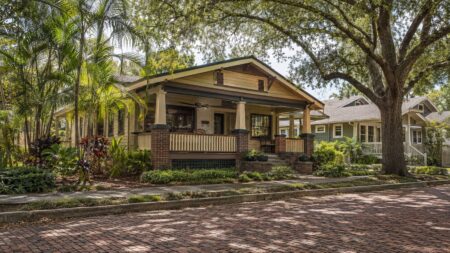
Historic Kenwood is a residential historic district immediately west of Downtown St. Pete in St. Petersburg. Its tree-lined streets, brick avenues, front porches and concentration of early-20th-century homes create a distinctly neighborhood-oriented setting close to Central Avenue. The commonly recognized district runs roughly from 1st Avenue North to 9th Avenue North and from 19th Street North to 34th Street North.
Historic Kenwood homes for sale are especially popular with buyers who value architectural character, access to independent businesses and an active community identity. The neighborhood contains more than 1,100 single-family homes, and many date to the 1920s. Because boundaries used in marketing can vary, confirm the parcel’s exact location rather than relying only on the neighborhood name in a listing.
The Historic Kenwood Neighborhood Association describes Historic Kenwood as a National Historic District known for bungalows, its Artist Enclave and community-led preservation. The association is a neighborhood organization, not a mandatory homeowners association. Buyers can also review the City’s Historic Kenwood planning information for official local-designation context.
Homes, Bungalows and Architectural Character
Craftsman bungalows are Historic Kenwood’s signature housing style, but the neighborhood is not architecturally uniform. Buyers may also encounter Frame and Masonry Vernacular homes, Minimal Traditional cottages, Tudor Revival, Mediterranean Revival, Colonial Revival, Ranch and American Foursquare influences. Garages, garage apartments, alleys and enclosed porches are common enough that two homes with similar bedroom counts can function very differently.
Original details such as broad porches, exposed rafter tails, built-ins, wood flooring and divided-light windows add character. However, condition varies widely. Some homes have been carefully restored, while others combine older systems with recent cosmetic work. A thorough inspection should pay close attention to the roof, foundation or crawlspace, electrical panels and wiring, plumbing supply and drain lines, HVAC, windows, termite history and evidence of unpermitted alterations.
Lot position also matters. Compare alley access, driveway width, garage condition, mature trees, drainage, accessory structures and the relationship between indoor living areas and outdoor space. If a guest suite, rental unit or future addition is important, verify zoning, permits and legal use before assuming an existing structure can serve that purpose.
Historic-District Guidelines and Renovations
Historic status should be evaluated at the parcel level. A National Register district recognizes historic significance. However, it does not automatically impose the same requirements as a local historic designation. Before planning exterior work, demolition, an addition or a major accessory structure, confirm whether the property is within a locally designated area and which reviews apply.
The City’s Historic Preservation resources explain local programs and offer guidance for researching historic properties. Buyers should also review the permit history, compare completed work with public records and ask whether prior improvements received required approvals. Replacement windows, porch changes, roof materials, siding and additions can affect both cost and the home’s architectural integrity.
For a renovated home, request invoices, permits, warranties and documentation for electrical, plumbing, structural and roofing work. For a project home, price the visible improvements together with insurance requirements, temporary housing needs and the availability of contractors experienced with older buildings.
Parks, Arts and the Central Avenue Corridor
Seminole Park is the neighborhood’s central green space, with shelters, a playground and lawns framed by residential streets. Historic Kenwood’s Artist Enclave and recurring events reinforce the neighborhood’s creative identity; the association’s events calendar is the best place to confirm current dates for community gatherings, art programs and seasonal activities.
Along the neighborhood’s southern edge, Central Avenue connects Historic Kenwood with the Grand Central District. This gives many residents convenient access to galleries, studios, murals, shops, restaurants and nightlife without living in the middle of Downtown St. Pete. The regional tourism guide’s Central Avenue overview is a useful starting point for exploring the corridor.
Walkability changes by block, so test the actual route from any home you are considering. Compare sidewalk condition, street crossings, lighting, bicycle comfort and the distance to your most-used destinations. A house near Central Avenue may offer easier access but more activity. Meanwhile, a home farther north can feel quieter and more residential.
Restaurants, Cafes and Everyday Life
Historic Kenwood is primarily residential, but its position beside Central Avenue puts a broad dining and entertainment corridor close by. Nearby choices range from coffee shops and bakeries to breweries, casual restaurants and destination dining. Baba on Central is one locally recognized example, and the adjacent Grand Central District adds many more independent options.
Because businesses and hours change, use the Grand Central food and drink directory to confirm current choices. For a broader day-to-day comparison, look beyond restaurants: check the route to groceries, pharmacies, fitness, medical care, parks and the destinations that matter to your routine.
Visit a prospective block on both a weekday and a weekend. Notice street parking, restaurant traffic, amplified music, deliveries and event activity. Buyers who want maximum walkability may prefer the southern edge. Meanwhile, those who prioritize a quieter residential feel may favor blocks farther from the commercial corridor.
What Historic Kenwood Buyers Should Compare
Before making an offer on a Historic Kenwood home, compare the property as carefully as the neighborhood:
- Historic and permit status: Confirm the parcel’s designation, zoning and permit history through the City’s Planning and Zoning resources.
- Insurance and major systems: Compare roof age, wind-mitigation features, electrical and plumbing updates, four-point inspection needs, replacement-cost estimates and available coverage.
- Flood and evacuation information: Review the parcel with Pinellas County flood maps and Know Your Zone. Flood zones and evacuation zones are different.
- Taxes: Check the current record with the Pinellas County Property Appraiser and estimate how a sale may affect future taxable value.
- Renovation quality: Look beyond finishes to permits, invoices, workmanship, structural changes, drainage and remaining useful life.
- Parking and accessory spaces: Verify driveways, garages, alley access, garage apartments and the legal use of any additional living area.
- Block-by-block fit: Compare traffic, evening noise, walkability, tree canopy, nearby commercial uses and access to I-275.
A property-specific review is especially important in an older neighborhood where condition, insurability and renovation history can vary substantially from one house to the next.
Nearby Neighborhoods and Search Resources
Historic Kenwood sits beside several areas that offer a different mix of housing and lifestyle. The Grand Central District emphasizes Central Avenue businesses and entertainment. Farther east, the EDGE District and Central Arts District lead into Downtown St. Pete. Buyers seeking another established historic neighborhood can compare Historic Old Northeast.
To widen the search, browse all St. Petersburg homes for sale or compare communities across the Pinellas County showcase. The advanced property search can refine price, property type, features and other criteria.
If you want help comparing historic homes, renovation histories and individual blocks, contact Buy In The Bay Realty Group for a property-specific search and showing plan.